Breakfast wasn’t served until 9, and after arriving a couple of minutes after another party, nobody came to our table until 09:25. As expected it was basic, white toast with tomatoes or olive oil as jamon is no use to us. The coffee was fine. Again as expected, the panaderia baked only the type of bread served in our accommodation. We slept well, which was the main thing.
So it was mid morning when we set off back the way we’d come, turning left after a few kilometres. The sun soon cleared the low mist but was in turn vanquished by cloud, which persisted all day apart from a couple of sunny spells, a cooler day than expected.
We climbed steadily to almost a thousand metres, making slow progress and having an early lunch near Alar after only about 10km. The cheese was excellent, compensating for the poor bread. We’d accomplished most of the day’s ascent by then and could enjoy the glorious mountain views, but unfortunately not in sunshine. A change of scenery after we’d dropped down, undulating roads free of traffic and dramatic rock formations to catch the eye.
After about 40km we joined the Via Verde Santander-Mediterráneo near the start of its restored section, a good dry surface of compacted earth and fine gravel. This path is the legacy of a rail project intended to link the ports of Santander and Valencia, providing an outlet for goods from the inland provinces through which the route was planned to pass. Construction spanned several decades, but the project was never fully completed.
The route is sometimes referred to as the Calatayud-Cidad Dosante line, as this was the section that actually entered service. Construction was initially carried out by the Santander-Mediterráneo Railway Company, progressing at a good pace during the 1920s. Initial plans also included a connection in Santander with the narrow-gauge Astillero-Ontaneda railway, which now forms yesterday’s via verde. By 1930, the section between Calatayud and Cidad de Valdeporres had been completed, but construction was halted due to various setbacks. During the Civil War, the line saw heavy use for military purposes. After the conflict ended, the route was incorporated into the network of the newly created RENFE in 1941.
At that time, the Franco regime revived plans to complete the line and began construction work in the province of Santander. However, in 1959, the entire project was halted and never completed. The section of the railway that was actually completed—spanning 367 km—remained operational for several decades. In January 1985, the line was closed to traffic along almost its entire length due to a lack of economic viability. Years later, the dismantling of the track was ordered. Only a few local sections have remained in service, while others lie abandoned or have been repurposed as part of the via verde. Dozens of stations, as well as numerous bridges, tunnels, and other structures, were built for the railway. On this unfinished line, the La Engaña Tunnel—6,976 meters long—held the record for the longest railway tunnel in Spain until quite recently.
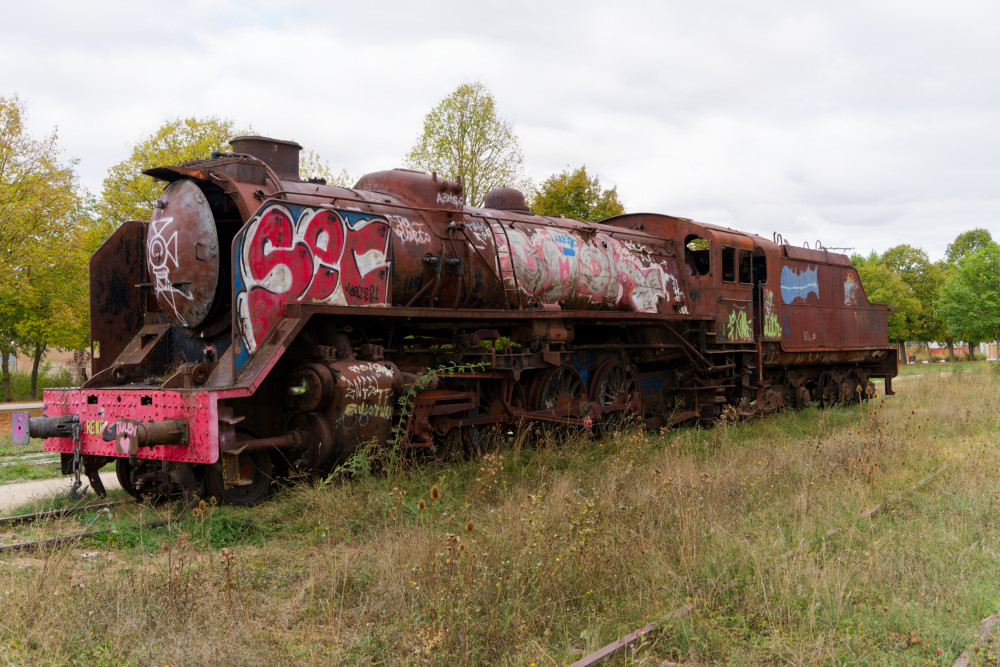
This took us all the way to Villarcayo where we checked in to our hotel after a fabulous day’s cycling. Their restaurant was closed so we walked into the town but could find only bars serving food. Rather than suffer another dreadful meal, we bought fruit and salad vegetables from the large supermarket and ate it in our room, the best meal we’ve had since leaving Portsmouth so far.